
Showing posts with label public safety. Show all posts
Showing posts with label public safety. Show all posts
Friday, July 19, 2013
Public Safety Hit Hard by Federal Cutbacks
The impact of sequestration is hitting public safety in Indian Country hard. Tribes have been cutting law enforcement positions and closing mental health programs. The horror stories are rolling in: The Oglala Sioux are down to one officer on duty at any time. The Navajo can't staff a jail that they built. The Red Lake Band of Chippewa are losing 22 BIA employees, mostly law enforcement officers. At Pine Ridge, where someone tries to commit suicide nearly every day, they have had to cut two counselor positions. Cuts to IHS programs have gone far deeper than expected, shuttering clinics and limiting emergency services.
While hundreds of millions have been cut from IHS and SAMHSA (mental health) programs, cuts to smaller programs are also having an impact. Programs designed to turn life around for kids have been decimated, from Headstart to the Tribal Youth Program, which had been helping kids discover alternatives to drugs and gangs. Tribal police are having more and more trouble staying ahead of the curve. As one officer explained, "It's really hard to be proactive when you don’t have enough staff."
What can be done? The National Congress of American Indians has already passed a resolution stating that sequestering funds for tribal activities amounts to a treaty violation, which still doesn't get boots on the ground or doctors in the clinic. Some tribes are cushioning the impact with funds from gaming, grant funds that have already been awarded or settlements. Some tribes are seeking partners in or out of the tribal community to help make up the gap. Join the discussion at our SafeRez group on LinkedIn to share ideas on how we can pull through this difficult time.


Wednesday, February 27, 2013
Sequester's Impact on Tribal Law and Order
Across the board cuts to federal programs seem all but assured of going into effect next week. While the effects won't be apparent right away, everyone will be feeling the pain before long, if the folks in Washington don't do something to reverse this legislation.
Already understaffed tribal courts stand to take a hit, as do programs to support intelligence sharing and provide alternatives to detention. Grant funds to support tribal Community Oriented Policing (like our own Tribal Prescription Drug and Drug Endangered Children program) will be cut a whopping 25%. The Bureau of Prisons will be cut, dashing hopes for improving and staffing tribal detention facilities. Health programs will get cut more than 8%—contrary to a law that states it can't be cut more than 2%—and those cuts are bound to include critical programs to combat substance abuse and support victims of domestic violence or drug endangerment. The BIE will also see crippling cuts to K-12 schools, colleges and vocational schools.
Now is the time to contact your Congressional representatives and let them know that Indian Country needs a federal budget that includes full funding for TLOA, Indian health programs and education programs. The gains we've been making under TLOA are too important to end up on the chopping block now.
Already understaffed tribal courts stand to take a hit, as do programs to support intelligence sharing and provide alternatives to detention. Grant funds to support tribal Community Oriented Policing (like our own Tribal Prescription Drug and Drug Endangered Children program) will be cut a whopping 25%. The Bureau of Prisons will be cut, dashing hopes for improving and staffing tribal detention facilities. Health programs will get cut more than 8%—contrary to a law that states it can't be cut more than 2%—and those cuts are bound to include critical programs to combat substance abuse and support victims of domestic violence or drug endangerment. The BIE will also see crippling cuts to K-12 schools, colleges and vocational schools.
Now is the time to contact your Congressional representatives and let them know that Indian Country needs a federal budget that includes full funding for TLOA, Indian health programs and education programs. The gains we've been making under TLOA are too important to end up on the chopping block now.
Friday, February 22, 2013
House Bill Keeps Tribal Protections

Senator John Barrasso from Wyoming, vice-chair the Senate Committee on Indian Affairs, voted against a previous version of VAWA but supports this one. Barrasso’s spokeswoman, Emily Lawrimore, told Indian Country Today Media Network, “He voted against the recent VAWA bill because it contains provisions that would likely be ruled unconstitutional by the courts. A Supreme Court ruling against this provision could be damaging to tribal authority and have irreversible consequences.”
So will this fix work to ensure the law holds up in court, or will it maintain the status quo, where domestic violence cases rarely get attention from federal prosecutors? Please join us at our LinkedIn Group, SafeRez, to share your thoughts!
Friday, February 8, 2013
What Can We Do About Domestic Violence NOW?
%20W.JPG)
No matter how you look at the statistics, a lot of rape, battering, stalking, child abuse and elder abuse cases already fall under the jurisdiction of tribal authorities, but aren't adequately prevented or prosecuted. The problems are legion. Tribal systems are overburdened, underfunded and often understaffed; the tribal jail system is "unbelievably broken" (according to a comment about a 2008 BIA study); victims and family members are often unwilling to involve police or press charges; drug or alcohol use may impact the reliability of testimony; and when criminals move to other reservations, their arrest records rarely follow them. Like eating a whale, these obstacles seem overwhelming, but can be reduced one bite at a time.
Congress can:
Fully fund the Tribal Law and Order Act, federal prosecutor's offices and existing public health programs, as well as create new funds for tribes to increase staffing, facilities, training, services and education.
Tribal governments can:
Make addressing domestic violence a priority by encouraging collaboration among tribal departments, seek and allocate funding for service providers and programs, actively participate in education and outreach, and ban non-Native offenders from tribal lands.
Tribal law enforcement can:
Stock adequate rape kits, seek funding to beef up staffing and training, collaborate with federal law enforcement and other tribal police to share best practices and resources, and work with health care providers and tribal or state service providers to deliver victim services, and share data with other tribes.
Tribal courts can:
Implement alternative sentences such as restitution for offenders, document cases so repeat offenders are identified and prosecuted accordingly, share data with other tribes and exercise the enhanced sentencing under TLOA.
Healthcare workers can:
Learn how to identify and screen victims of domestic violence, carefully document and report cases, develop a referral network of service providers, and provide resource materials for patients.
Families and friends can:
Learn about available resources, contact your tribal and federal government representatives to insist on change, organize safety and prevention programs, and support victims in leaving dangerous situations, prosecuting their attacker and in the healing process.
Victims can:
Share experiences with other victims in the community, help each other to find the strength to stop the abuse and to heal, and to raise a voice in protest against a culture that allows these crimes.
More Resources:
National Domestic Violence Hotline
Mending the Sacred Hoop
Tribal grant programs to prevent violence against women
Love is Respect: teen dating violence site
Men's Resource Center for Change
Guide to raising awareness in Indian Country
Do you have more ideas? We want to hear them!! Lamar Associates has started a new group, called SafeRez on LinkedIn and we welcome everyone who wants to change our communities for the better. Come and join the conversation!
Thursday, January 24, 2013
Partnerships for Public Safety
 |
| Graph courtesy the state of Colorado. |
How does that work for Emergency Management Planning? To begin with, tribes need to expand their concept of community to include local and county governments and agencies as well as state and federal partners.
The National Congress of American Indians (NCAI) recommends federal legislation to improve collaboration between tribes and states and to amend the Robert T. Stafford Disaster Relief and Emergency Assistance Act so tribes can make direct requests to the President in case of disasters or emergencies. The amendment (like much critical legislation for Indian Country) did not make it through the last Congress, but could be passed by this one. Whether Congress takes additional steps to include tribes in a national public safety communications network or facilitate strong partnerships between tribes or states remains to be seen.
Meanwhile, it's up to each tribe to negotiate arrangements with their broader community, which often take the form of Memoranda of Understanding (MOUs). As the chart above shows, it takes a high degree of leadership, planning and collaboration to achieve sustainable and responsive emergency management systems. At our upcoming Emergency Management and Public Safety for Tribal Officials training, the expert native trainers at Indian Country Training will offer participants critical hands-on training for crafting an MOU that will involve a broader community in keeping your tribal community safe. We look forward to seeing you in Albuquerque on February 26-27!
Wednesday, January 16, 2013
Talking About the Weather

The numbers are in for 2012, and there is no arguing that it
was a hot year for those of us in the lower 48. The shifting weather patterns
are not just bringing hot days, although people in Oklahoma suffered through two of the hottest days in recorded history. Several states suffered devastating drought conditions, which brought wildfires to some tribes (in Montana, South Dakota, Washington and Arizona, for example) and caused widespread suffering for people and animals alike. Other events included massive outbreaks of tornados, a multi-state derecho, and of course, superstorm Sandy.
Everyone knows you can talk about the weather all you want and it won't change a thing, but we're facing some serious weather, and by all indications, it's just going to get worse. What we can do is hope for the best and plan for the worst. Tribal officials from council members to department heads will all benefit from our upcoming training on Emergency Management and Public Safety for Tribal Officials. Native communities in the US are expected to be hit hardest by changing conditions, and it's up to us to be ready. In this two-day session, we will not only talk about proposed changes to the way tribes can get disaster relief, but help officials plan how to keep infrastructure intact and people safe, no matter what. To learn how better emergency management can protect your tribe's assets and heritage, read this moving testimony from the governor of Santa Clara Pueblo in New Mexico, recently devastated by the Las Conchas fire.
Thursday, December 13, 2012
Feb 2013: Emergency Management and Public Safety For Tribal Officials Training
 Many tribes these days are coming to grips with the fact that the damage a natural disaster can bring to a community doesn't stop when the emergency is over. Our Native trainers, and our partners at Risk and Rewards Management Group, have decades of experience with planning for disasters, establishing mutual aid agreements and mitigating the impact of a fire, drought, tornado, hurricane or winter storm on a tribal community.
The training will be held in Albuquerque, NM February 26-27, 2013.
Click here to learn more about this training opportunity. Click here to register.
Tuesday, November 20, 2012
Don't Be A Victim of Holiday Crime

Keep all valuable items close to you. Don’t put your purse or shopping bags down when you’re looking at other items on display. Thieves will take advantage of this short period of inattentiveness as a window to snag all your belongings. Keep your purse shut and tucked under your arm. Never leave any of your belongings unattended. When sitting at a restaurant don’t hang your purse on the back of the chair.
There is safety in numbers. If possible, shop in a group or with another person. Thieves often times work in groups. One thief will distract you by bumping into you and the other will rob you. If you are shopping with a group of people, it’s more difficult and less likely for a robbery to occur.
Don’t talk to strangers. We tell our children this, but as adults we should also follow this rule. As mentioned earlier, thieves will try to distract you. They often do this by asking you questions or for help while their partner in crime is stealing your belongings.
Have your keys in hand. When you are walking to your car make sure you already have your keys handy. Muggers count on people being distracted as they’re fumbling for their keys. Walk with confidence and be very alert to anyone walking up on you. Prior to getting in your car be sure no one has broken in and climbed in the back seat. And, once you get in your car, immediately lock the doors.
Trust your intuition. If you are getting a bad vibe from someone, trust your instinct. Don’t get into an elevator alone with someone if it doesn’t feel right. Be aware of anyone who might be following you or seems suspicious. Try to park as close to the store as you can and in a well lit area, if shopping at night. If you are particularly nervous, go to the security office and ask someone to escort you to your car.
Tuesday, October 9, 2012
Upcoming Training Opportunity: Drugs of Abuse
Learn to recognize the signs of methamphetamine use, prescription drug and over the counter drug abuse, synthetic drug use or heroin use in tribal housing. In addition to identification, participants will learn effective abatement strategies.
Click on the link to learn more about our upcoming training in Scottsdale, AZ. This two day, interactive program is free for Indian Tribe or Tribal Housing Authority employees. Any other participants can register for $50. Click here to register online.
Click on the link to learn more about our upcoming training in Scottsdale, AZ. This two day, interactive program is free for Indian Tribe or Tribal Housing Authority employees. Any other participants can register for $50. Click here to register online.
Friday, September 7, 2012
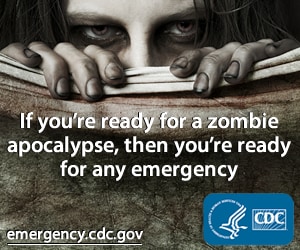
Ready for the zombie apocalypse?
Have a plan, make a kit, be prepared. Even though the CDC doesn't actually think a zombie apocalypse is imminent, the same strategies that will keep you safe from zombies will keep you safe from the much more real threat of earthquakes, tornadoes and other natural disasters.
Wednesday, August 15, 2012
Sex Offenders in Your Community
When released from prison, there are few restrictions that prevent sex offenders from living anywhere they want. Depending on the case, some individuals may be released without supervision. A recent report from the Department of Justice Office of Community Oriented Policing (DOJ COPS) offers individuals more information about steps taken to monitor sex offenders and how to protect your family.
A few key tips from the report:
• Check the National Sex Offender Public Website to see if there any sex offenders are living within three miles of your home or children's school.
• Practicing proactive parenting, including monitoring Internet use, and regularly checking the offender website can alert you to suspicious individuals quickly.
• Understand the differences among the types of offenders.
• Encourage any offenders you know to fully comply with court orders.
Click here to download the full report.
A few key tips from the report:
• Check the National Sex Offender Public Website to see if there any sex offenders are living within three miles of your home or children's school.
• Practicing proactive parenting, including monitoring Internet use, and regularly checking the offender website can alert you to suspicious individuals quickly.
• Understand the differences among the types of offenders.
• Encourage any offenders you know to fully comply with court orders.
Click here to download the full report.
Tuesday, June 19, 2012
Great News from the DEA
The Drug Enforcement Agency announced today that they would be regulating 26 synthetic drugs under the Controlled Substances Act under Schedule I including several synthetic cannabinoids and the "2 C family" of hallucinogens that have been in the news recently. 
We applaud all such actions on the part of the government, as it will clear up many jurisdictional issues with Indian Country smoke shops. However, as I pointed out not too long ago for Indian Country Today, when you start with 450 known compounds, banning some is a good start, but doesn't address the whole problem. A more comprehensive approach is to change the culture in which sales of these harmful chemicals can thrive, even when they're labeled "not for human consumption."

We applaud all such actions on the part of the government, as it will clear up many jurisdictional issues with Indian Country smoke shops. However, as I pointed out not too long ago for Indian Country Today, when you start with 450 known compounds, banning some is a good start, but doesn't address the whole problem. A more comprehensive approach is to change the culture in which sales of these harmful chemicals can thrive, even when they're labeled "not for human consumption."
Monday, June 18, 2012
Oglala Lakota Business Students Fight Youth Suicide
This Friday, if you're near Kyle, SD, visit the gym at the Piya Wiconi Oglala Lakota College campus from 4 pm - 7 pm. Students in the Introduction to Business class at the college are exhibiting pictures taken by elementary school and middle school students about "what hope looks like." The students distributed over 200 disposable cameras as part of this effort to combat the local epidemic of youth suicide, which is among the highest worldwide.
Assemble a Kit, Make a Plan, Stay Informed
Tuesday, February 28, 2012
Proposed 2013 Budget Increases Funds to Native Law Enforcement
The White House's proposed budget holds most Indian Affairs programs steady for FY 2013 but increases funding in a few key areas. The budget contains $11 million in targeted increases for BIA Law Enforcement for law enforcement operations, detention center operations and tribal courts. The request for law enforcement operations also builds on increases from previous years to support criminal investigations and police services that improve recruitment and hiring for law enforcement officers and detention center staff.
The Assistant Secretary for Indian Affairs Larry EchoHawk said,
Read the full story at the Cherokee Phoenix.
The Assistant Secretary for Indian Affairs Larry EchoHawk said,
"The budget request maintains President Obama’s commitment to strengthening tribal nations by making targeted increases in Indian Affairs programs that support tribal self-determination in managing BIA-funded programs, increase public safety in tribal communities by strengthening police capabilities, improve the administration of tribal land, mineral, timber and other trust resources and advance Indian education."
Read the full story at the Cherokee Phoenix.
Subscribe to:
Comments (Atom)


 Posts
Posts


