When a wildfire swept through this mobile home park early one morning, residents had no time to think about what they wanted to take with them, they just had to run for it, before everything they had burned to the ground. Even small shifts in the weather can make a wildfire grow in unpredictable ways and travel faster than people can mobilize to stop it.
Devastating wildfires are, unfortunately, a fact of life these days. Drought across the West, combined with bad beetle infestations and a century of fire suppression have created a kind of perfect storm of conditions. This year, the wildfire season is starting months early, with fires burning this week in California, Arizona, New Mexico, Wyoming, Florida, and Alabama.
The approach to emergency planning for wildfires is the same as for any other emergency:
Assemble a Kit-- get together something you can grab as you go, containing clothes, medication, documents, and other things you may need (including food and medication for pets!)
Make a Plan-- talk with other family members about what to do and where to meet
Stay Informed-- stay aware of local conditions
There's also plenty you can do to keep your house safer.
Showing posts with label Indian Country emergency preparedness. Show all posts
Monday, May 6, 2013
Tuesday, January 29, 2013
The High Price of Not Planning For Disaster
In times of diminishing funding and strapped budgets, it may seem like good sense to postpone training. But when it comes to disaster preparedness, any money you invest now will pay off in the long run. Weather extremes may cause the next disaster on your reservation, pueblo or rancheria. Perhaps the disaster will be human-caused, or won't even be on your tribal land, but at a nearby power plant, international border or transportation route. It may affect your people, property and even your power and communications infrastructure. Identifying these risks now will help your tribe focus on how to address them successfully, should worst come to worst.
The expert Native trainers presenting our two-day course in February understand the challenges that tribal governments and organizations face, because we have lived in and served Indian Country our whole lives. We appreciate that you may be running operations on a shoestring, so we'll help you strategize how to work with all kinds of different partners to establish mutual aid agreements, develop preparedness grants or share resources. We have worked with American Indian and Alaska Natives from all over the country at the tribal and federal level, so we understand the intricacies of jurisdiction and due authority in every state.
If you are considering signing up for our Emergency Management and Public Safety for Tribal Officals course, but are hesitating because of the price, consider what some tribes struggled with last year, just from getting hit by Mother Nature:
The expert Native trainers presenting our two-day course in February understand the challenges that tribal governments and organizations face, because we have lived in and served Indian Country our whole lives. We appreciate that you may be running operations on a shoestring, so we'll help you strategize how to work with all kinds of different partners to establish mutual aid agreements, develop preparedness grants or share resources. We have worked with American Indian and Alaska Natives from all over the country at the tribal and federal level, so we understand the intricacies of jurisdiction and due authority in every state.
If you are considering signing up for our Emergency Management and Public Safety for Tribal Officals course, but are hesitating because of the price, consider what some tribes struggled with last year, just from getting hit by Mother Nature:
- Flooding cost the pueblo of Santa Clara more than $11.2 million dollars
- Flooding from a single storm caused damage to structures throughout the Coleville Reservation
- Several eastern tribes sustained outages, flooding and damage to homes and property during Superstorm Sandy
- A single wildfire on the Northern Cheyenne Reservation cost more than $3 million to fight; the tribe also spent $89,000 to fight a second fire
- The Crow Reservation spent $300,000 to fight two wildfires
- The Montana wildfires consumed homes, cattle and natural resources, including critical rangeland
- Drought dealt a crushing blow to the Pine Ridge Reservation as well as pueblos and reservations from California to Oklahoma; estimated losses to crops and livestock due to drought was $426 million in Oklahoma alone
The cost of disasters is often hard to calculate for years after the event, because sustained damage to the environment, watersheds, sacred sites and cultural institutions may take years to mitigate. As Governor Walter Dasheno of Santa Clara Pueblo testified in 2011 to the Senate Committee on Indian Affairs:
Never again in our lifetime will we see our traditional and treasured homeland and spiritual sanctuary, the Santa Clara Canyon, as we have known it. It will take generations for our community and lands to recover from the devastation of this fire. But this is our only homeland; it is the place we have been entrusted with since time immemorial. While we intend to devote the resources we can to the healing of our land and the protection of our community we do not have the resources to do it alone.
We're not going to stop the weather, but we can help you ensure that your tribe, pueblo or rancheria has the resources and the partners it needs to face the future with confidence, no matter what comes.
Thursday, January 24, 2013
Partnerships for Public Safety
![]() |
| Graph courtesy the state of Colorado. |
How does that work for Emergency Management Planning? To begin with, tribes need to expand their concept of community to include local and county governments and agencies as well as state and federal partners.
The National Congress of American Indians (NCAI) recommends federal legislation to improve collaboration between tribes and states and to amend the Robert T. Stafford Disaster Relief and Emergency Assistance Act so tribes can make direct requests to the President in case of disasters or emergencies. The amendment (like much critical legislation for Indian Country) did not make it through the last Congress, but could be passed by this one. Whether Congress takes additional steps to include tribes in a national public safety communications network or facilitate strong partnerships between tribes or states remains to be seen.
Meanwhile, it's up to each tribe to negotiate arrangements with their broader community, which often take the form of Memoranda of Understanding (MOUs). As the chart above shows, it takes a high degree of leadership, planning and collaboration to achieve sustainable and responsive emergency management systems. At our upcoming Emergency Management and Public Safety for Tribal Officials training, the expert native trainers at Indian Country Training will offer participants critical hands-on training for crafting an MOU that will involve a broader community in keeping your tribal community safe. We look forward to seeing you in Albuquerque on February 26-27!
Wednesday, January 16, 2013
Talking About the Weather
The numbers are in for 2012, and there is no arguing that it
was a hot year for those of us in the lower 48. The shifting weather patterns
are not just bringing hot days, although people in Oklahoma suffered through two of the hottest days in recorded history. Several states suffered devastating drought conditions, which brought wildfires to some tribes (in Montana, South Dakota, Washington and Arizona, for example) and caused widespread suffering for people and animals alike. Other events included massive outbreaks of tornados, a multi-state derecho, and of course, superstorm Sandy.
Everyone knows you can talk about the weather all you want and it won't change a thing, but we're facing some serious weather, and by all indications, it's just going to get worse. What we can do is hope for the best and plan for the worst. Tribal officials from council members to department heads will all benefit from our upcoming training on Emergency Management and Public Safety for Tribal Officials. Native communities in the US are expected to be hit hardest by changing conditions, and it's up to us to be ready. In this two-day session, we will not only talk about proposed changes to the way tribes can get disaster relief, but help officials plan how to keep infrastructure intact and people safe, no matter what. To learn how better emergency management can protect your tribe's assets and heritage, read this moving testimony from the governor of Santa Clara Pueblo in New Mexico, recently devastated by the Las Conchas fire.
Thursday, December 13, 2012
Feb 2013: Emergency Management and Public Safety For Tribal Officials Training
Many tribes these days are coming to grips with the fact that the damage a natural disaster can bring to a community doesn't stop when the emergency is over. Our Native trainers, and our partners at Risk and Rewards Management Group, have decades of experience with planning for disasters, establishing mutual aid agreements and mitigating the impact of a fire, drought, tornado, hurricane or winter storm on a tribal community.The training will be held in Albuquerque, NM February 26-27, 2013.
Click here to learn more about this training opportunity. Click here to register.
Monday, October 29, 2012
Quick Preparedness Guide
There are at least six Indian nations in the path of Hurricane Sandy, although the Shinnecock Indian Nation of Long Island is likely to suffer the worst; residents are being evacuated to an American Red Cross shelter at Hampton Bays High School. FEMA is advising people to be prepared for hurricanes, heavy rains and flooding and winter storms.
If you're in the path, here's your last minute preparation guide:
• Get some emergency supplies, including food and water, for yourself, your pets and your family for up to 3 days; be sure to get cash back, as power outages will disrupt banking.
• Make sure you have at least a half a tank of gas in your car.
• Make a plan with your family and love ones about where to meet and stay if evacuated or if the weather becomes very cold while the power is out. Find the nearest shelter by texting SHELTER plus your 5-digit ZIP code to 43362 (4FEMA). Example: SHELTER 10005
• Protect your property by covering your windows and clearing branches away from your roof.
• Make arrangements to keep your cell phone charged at all times so you can continue to stay informed of changing conditions.
Along with the rest of the nation, we hope those who are in the storm's path will stay safe and that the disruption to your lives will be minimal.
If you're in the path, here's your last minute preparation guide:
• Get some emergency supplies, including food and water, for yourself, your pets and your family for up to 3 days; be sure to get cash back, as power outages will disrupt banking.
• Make sure you have at least a half a tank of gas in your car.
• Make a plan with your family and love ones about where to meet and stay if evacuated or if the weather becomes very cold while the power is out. Find the nearest shelter by texting SHELTER plus your 5-digit ZIP code to 43362 (4FEMA). Example: SHELTER 10005
• Protect your property by covering your windows and clearing branches away from your roof.
• Make arrangements to keep your cell phone charged at all times so you can continue to stay informed of changing conditions.
Along with the rest of the nation, we hope those who are in the storm's path will stay safe and that the disruption to your lives will be minimal.
Wednesday, September 12, 2012
Preparation Is Key When Disaster Strikes
Recent wildfires throughout Indian Country recently reminded us that by the time you start smelling smoke, it's too late to make your plan, get a kit together of things you may need for a few days, and make a safe escape. Check out this recent article in Indian Country Today for some tips on what you can do to prepare for this season's hazards.
Friday, September 7, 2012
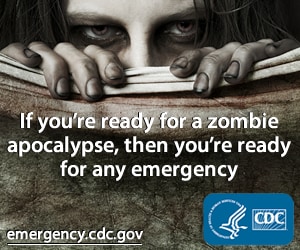
Ready for the zombie apocalypse?
Have a plan, make a kit, be prepared. Even though the CDC doesn't actually think a zombie apocalypse is imminent, the same strategies that will keep you safe from zombies will keep you safe from the much more real threat of earthquakes, tornadoes and other natural disasters.
Thursday, June 28, 2012
Ready for Wildfire Season?
While the fires in Colorado are getting all the attention, fires are burning communities throughout the Western US. The Ash Creek fire burning through the Northern Cheyenne Reservation and in Rosebud County has destroyed 19 homes and is threatening scores more. Our hearts go out to all the people in the country who have suffered from evacuations and the terrible destruction. As the people in New Mexico's pueblos, California's bands and Arizona's reservations have learned, recovering from wildfires can take years.
As emergency preparedness consultants, we can't stress enough that the time to prepare for a wildfire is before it starts. The least you should do to prepare for any natural disaster is to get a kit, make a plan and be informed of current conditions. To truly protect your home or business, read through the wildfire information at ready.gov.
Monday, June 18, 2012
Assemble a Kit, Make a Plan, Stay Informed
Saturday, April 14, 2012
Be Prepared for Tornadoes
We hope our friends, colleagues and loved ones in the Plains stay safe as the nation anxiously watches tornadoes brewing in the region today. Much of Indian Country is prone to tornadoes and ready.gov has some great tips for preparing and for staying safe during and after a tornado hits. Lamar Associates is ready to help, whatever weather comes your way.
Subscribe to:
Comments (Atom)